Beekeeping is not for the faint of heart. I have heard that from more than one experienced beekeeper this year as I’ve been going to meetups and learning from folks.
….boy, were they not kidding.
When last I wrote, I had completed a reduction in a observation hive at Holiday Park and introduced those bees to my small colony via a newspaper method. I waited a few days to check on them and when I did, i saw that that the paper had not just been chewed through, it was mostly gone! So introductions were over, and the bees were intermixing.
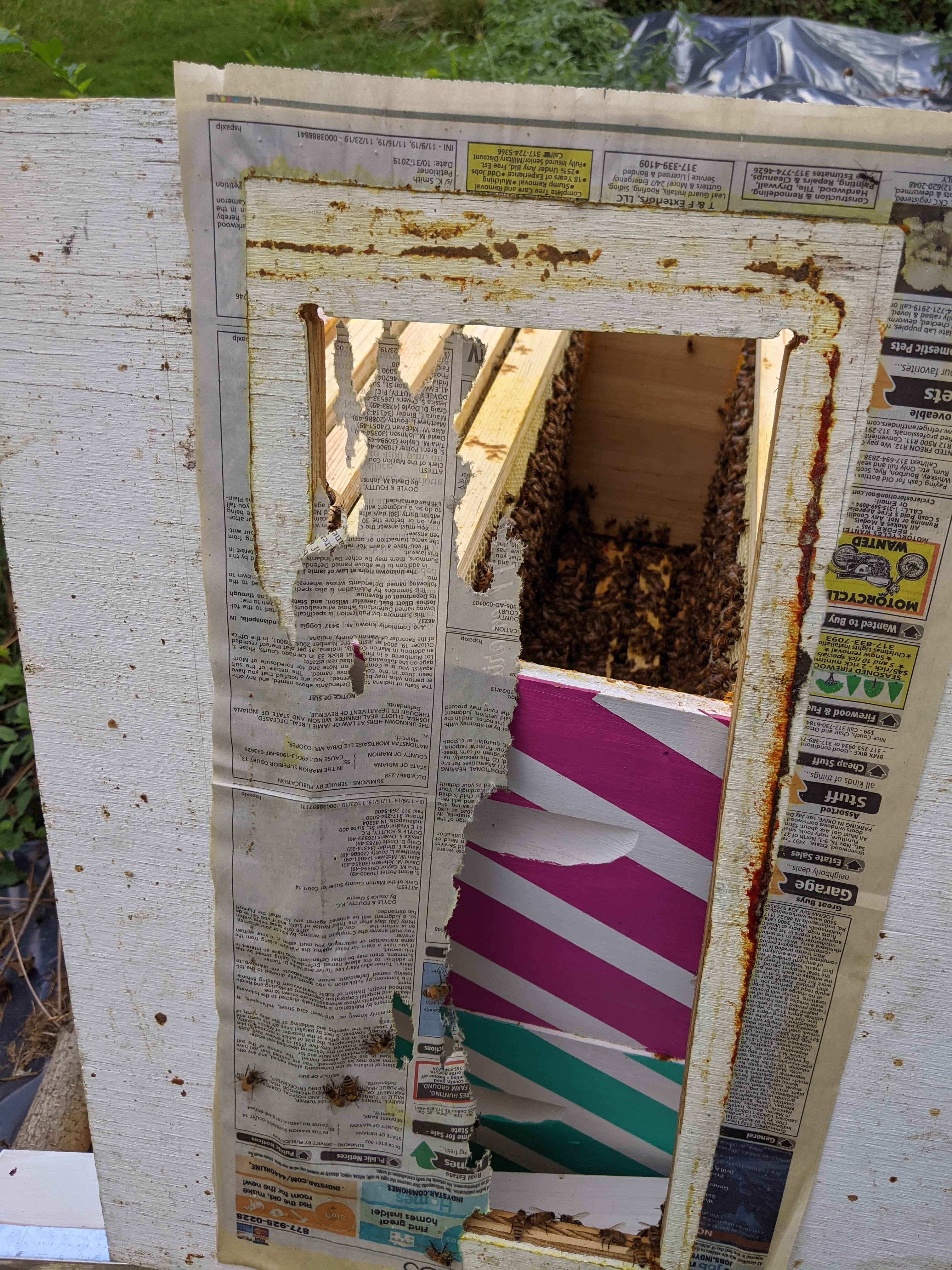
Things looked well as I proceeded to take the nuc off, and begin to move the frames down to finish the process.
Then it happened.
(I should preface this with the statement that I had about 90 minutes to finish up my chore and get cleaned up and head to the monthly beekeeper meeting at Holiday Park.)
As I’m pulling a frame out, a queen comes up from the other side, and pokes her head out to say hi to me. This queen had no marking. My queen had a very large blue dot on her back. This was not my queen!
In horror I realized that we had mistakenly taken the queen from the Holiday Park hive and they were now queenless.
In a rush, I texted the guy who helped me that Saturday, Don, and my mentor, David. through some consulting, I was able to place the queen in a clip that I had bought ahead of time in the event I might need one. I placed her in a box and rushed over to Holiday Park with the idea of maybe I could just quickly slide her into the entry port of the hive and things would be ok.
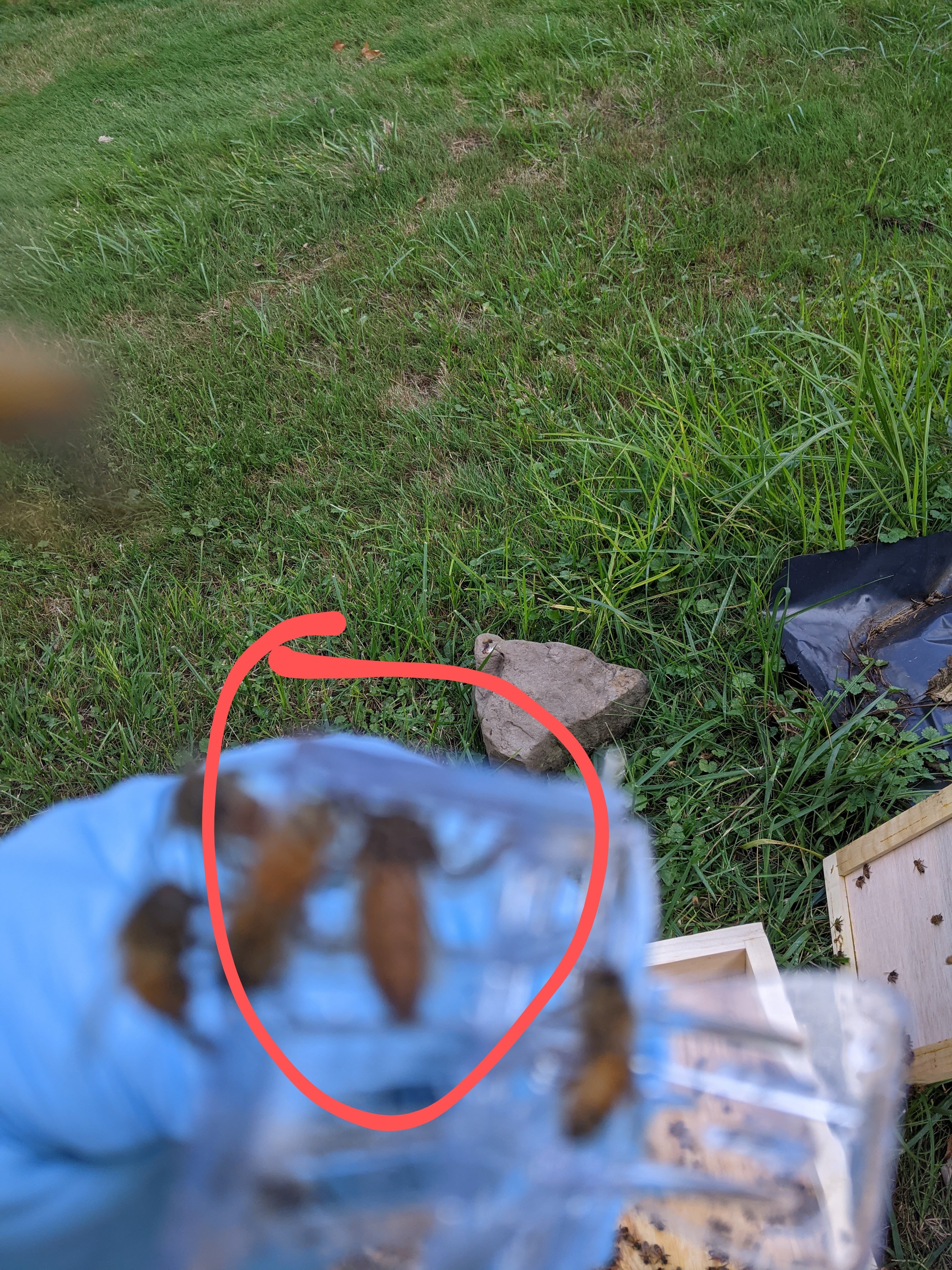
When I got there, Don and Dave were inspecting the hive and consulting, they decided that it would be better to place the queen in a queen cage (a queen cage has a hole in one end that is normally filled with candy. the bees can get used to the queen while they chew on the candy, and then when she is freed, the colony has accepted her. (at least that is how it works in the text books.)
I left them to do that, as I had to work the next day, then a couple of days latter, I get a text from David that there was already a queen in the Holiday Park Hive. So what had happened was my Blue dot queen was removed for some reason, and replaced with this unmarked queen. I had in fact given away my queen.
When a hive loses a queen, the bees get a different temperament, her pheromones’ are not guiding them anymore, and they become a bit aimless. this begins about 15 minutes after the queen has been removed from the colony. When you do this, you can’t just stick her back, you have to re-introduce her as a new queen.
David decided to show me some grace and brought me a replacement queen (white dot on this one to show she was a ’21 queen). He placed her in my hive, gave me some advice on bee space and was on his way.
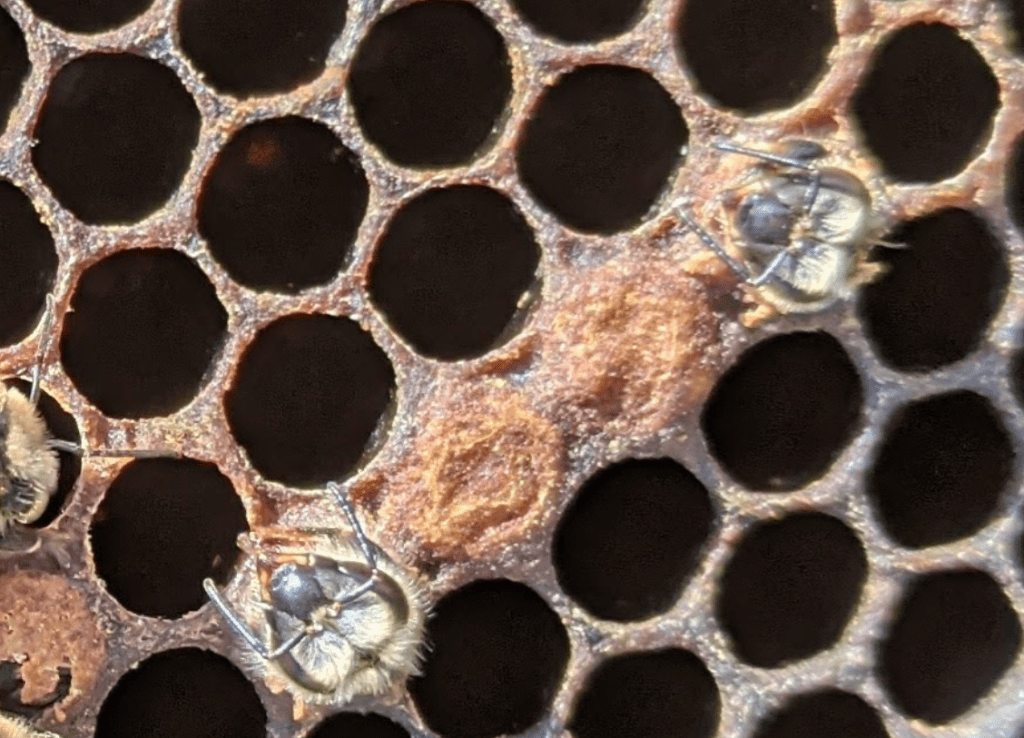
All was well and good, I observed this week many orientation flights, which meant that the brood I brought over from Holiday Park’s hive had hatched out, below is a picture of a couple of the ladies as they were crawling out of their spaces.
As I did my inspection, I noted there was a *lot* of honey. This made me happy, as winter is coming, and food stores will be needed. But then I also noted that there were not any eggs or brood. I did a total breakdown of the hive, and confirmed, no eggs, no brood, and no white dot queen.
Where did she go?
I could not figure out where she went off to, but she was not in my colony. There was one emergency queen cup, but it was empty.
So 2 theories exist on what happened.
1. the colony did not like her after being introduced so quickly after 5 frames of new bees and killed her.
2. there was a queen cup that we missed before, there was a virgin queen and they had a duel in which case both died from mortal blows.
Either way, the hard truth is it’s September, the winter bees need to be hatched in October. I’ve run out of time for fixing things
From the website Trunch Beekeeping:
| me from from laid egg to emerged queen | 16-17 days (8-9 days open and 8 days sealed) |
| time until virgin queen is ready to fly & mate | 6-7 days |
| time from mating to laying eggs | min. 2-3 days, often longer |
| average time from emergence to laying | two and three weeks (14-21 days) |
| average time from laid egg to laying queen | approx. 30 days |
And to add further fun to the morning, when I pulled my frames out for inspection, the bars that I place them on spread apart, and all my frames fell to the ground, more dead bees.
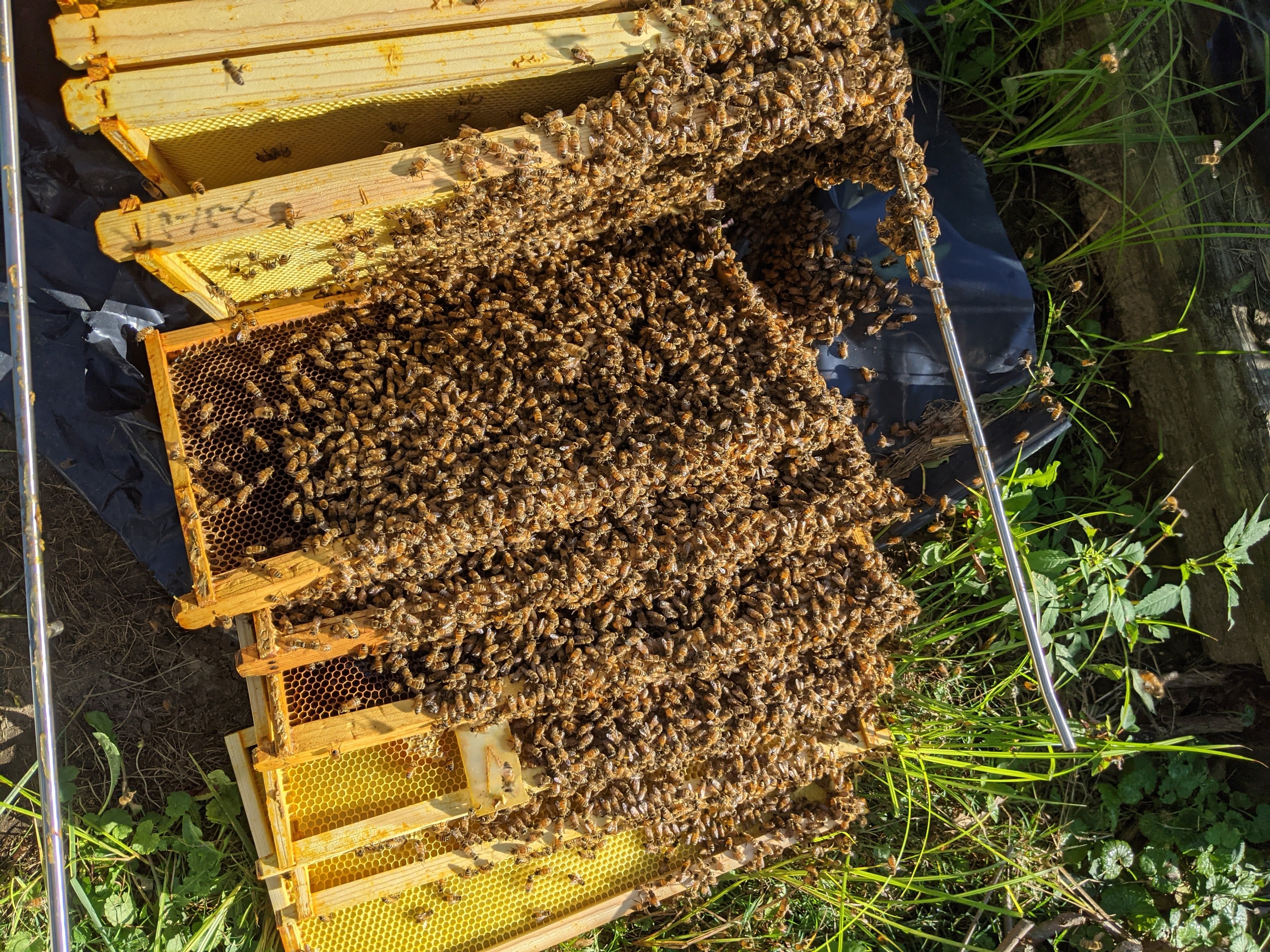
I’m now running a razor thin margin for getting my colony in shape to survive the winter. Oh, and I don’t have a queen or anymore eggs in my colony.
Add to that, I did a mite check and discovered 3 mites in 300 bees, which means I have to treat for mites now (I had just finished a round of Apiguard strips, and wanted to test to see where they were after that. I think the strips did nothing for us.)
So I shared with my wife, that the best thing to do might be let the hive die out, freeze the existing frames to kill any mites and try again next spring with a new fresh box of bees.
I shared this with David, and he surprised me by having me drop by his house to pickup *another* queen from him. this time, he also loaned me an introducer. this device takes the place of a frame, and lets the queen have a run to move around, and also some guards in place so she can’t get attacked.
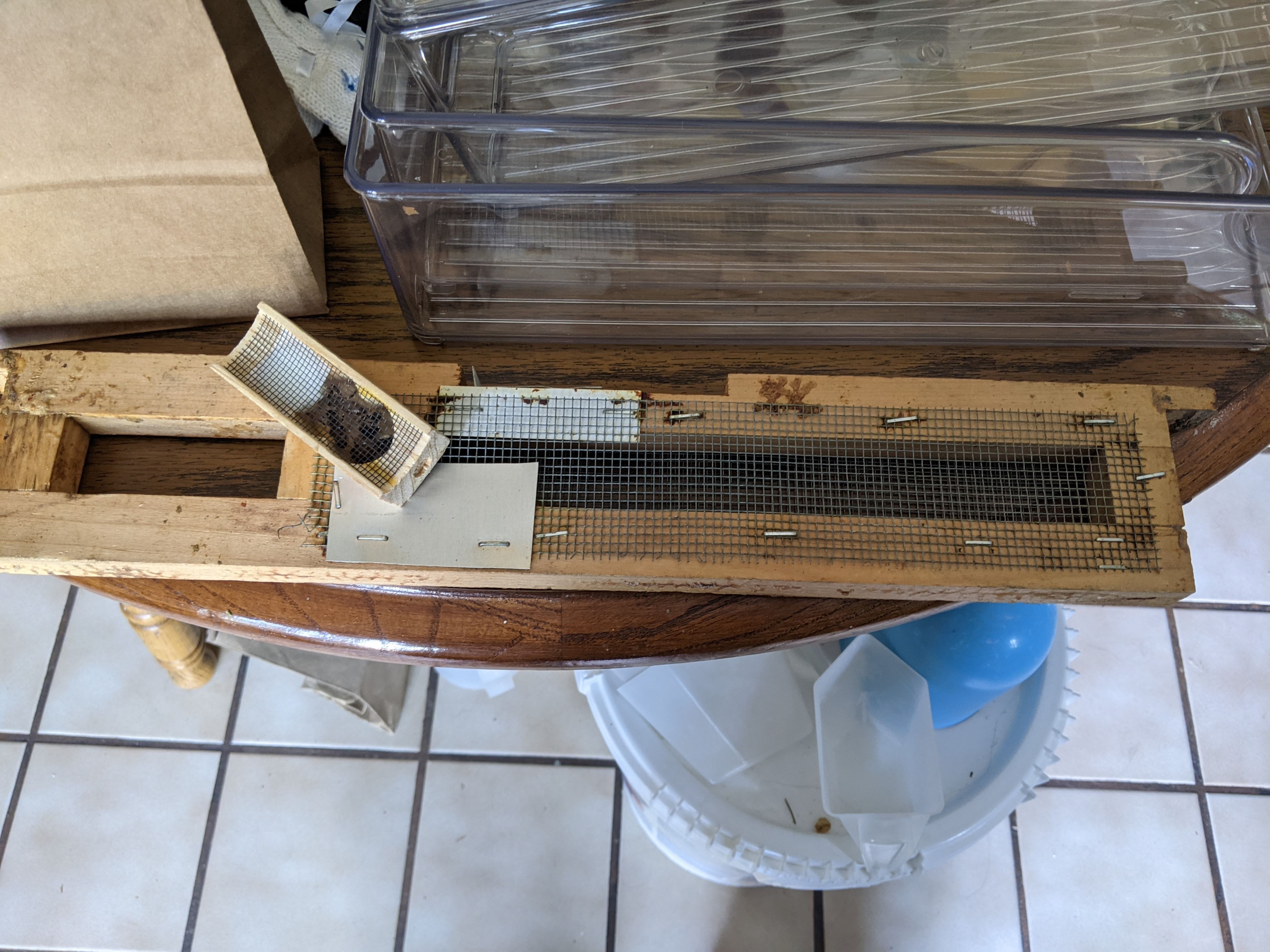
If there is another queen in there that I missed, this would give me the chance to see the hive accepting or rejecting the newest queen without her untimely end. So now I have this installed, I will check in after a few days, see how they are doing, and will let her out if they seem to like her.
My take away from all of this was to slow down and think. When you move the frames around, you are slow and methodical. You should never rush things like a hive inspection. If you don’t have the time to deal with unanticipated issues, let them sit until you can come back ready to conquer the moment. My rushed snap judgement lost me 2 queens.
Hard lessons indeed.
 Neonpenguin